Frogs, Felines, and the Accidental Alliance That Broke the Internet's Brain
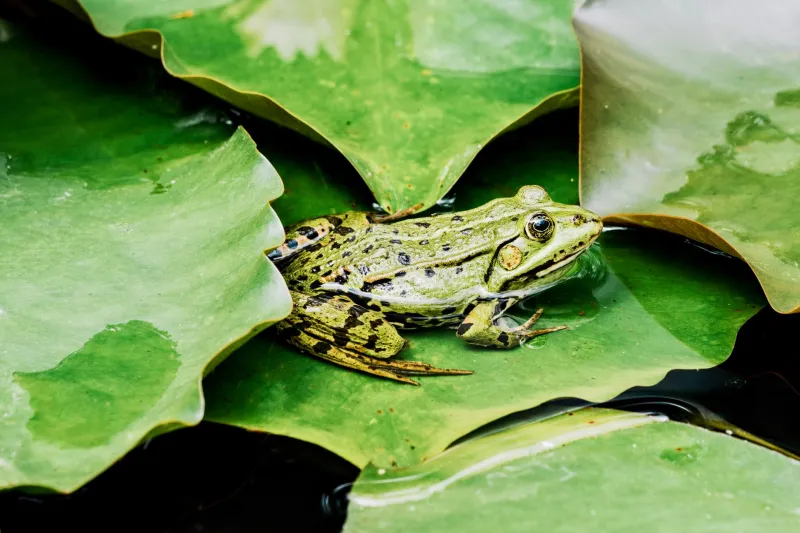
Somewhere around 2008, a sad green frog sat in a dimly lit corner of 4chan, whispering "feels good man" into the void. Nobody — not Matt Furie, not the anonymous posters who adopted him, not a single media critic with a think-piece budget — could have predicted that this moist little guy would eventually pave the yellow brick road for your aunt to post a Grumpy Cat meme at Thanksgiving without anyone flinching.
And yet. Here we are.
The relationship between Pepe the Frog and the ascendancy of cat meme culture is one of the internet's great unacknowledged love stories. Not romantic, obviously. More like two very chaotic entities that accidentally agreed on the rules of engagement and then let the rest of us live inside the consequences.
The Imageboard Incubator: Where Weird Goes to Grow Up
To understand how cats inherited the earth, you have to understand what 4chan actually was — and still largely is — as a cultural petri dish. It was a place where context collapsed, sincerity was a liability, and the most unhinged image paired with the most deadpan caption won the day. Pepe thrived there not because he was edgy, but because he was infinitely malleable. Happy Pepe. Sad Pepe. Smug Pepe. Pepe in a suit. Pepe as a historical figure. The frog became a vessel for whatever emotional register the moment demanded, stripped of any fixed meaning.
Cat content, emerging roughly in parallel on sites like I Can Has Cheezburger and later Reddit, operated on the exact same logic. A cat making an indignant face meant nothing and everything simultaneously. "I Can Has Cheezburger" wasn't a coherent sentence — and that was entirely the point. The grammatical chaos was load-bearing. It signaled: we are playing by different rules here, and you either get it or you don't.
Both Pepe and the early cat meme canon were built on the same foundational principle: absurdism as a shared language, accessible to anyone willing to stop asking "but why, though?"
The Legitimization Ladder Nobody Admits They Climbed
Here's the thing about Pepe's mainstream breakthrough that nobody in the media fully reckoned with at the time: when outlets like The New York Times started writing explainers about the frog — even the panicked, concerned ones around 2016 — they were inadvertently performing a cultural service. They were teaching normies that imageboard humor existed, that it had history, that memes were not just random pictures but an entire ecosystem with internal logic.
Cat content benefited enormously from this without having to take any of the heat.
While Pepe was busy being a Rorschach test for every cultural anxious moment between 2014 and 2020, cat memes were quietly moving upmarket. Grumpy Cat got a Lifetime movie. Lil Bub appeared on talk shows. The "this is fine" dog — okay, technically not a cat, but spiritually a cat — became the default image for national catastrophe. Absurdist animal content was being laundered into respectability while everyone was distracted arguing about what a cartoon frog meant.
Pepe took the arrows. Cats took the book deals.
The "Anything Goes" Inheritance
What cat meme culture specifically inherited from Pepe's chaotic tenure at the top of internet consciousness is something we might call plausible absurdity — the cultural permission to be completely unhinged as long as the surface presentation is cute enough to provide deniability.
Consider the entire genre of cats photoshopped into Renaissance paintings. Or cats with tiny hats captioned with elaborate lore about their fictional medieval kingdoms. Or the inexplicable longevity of cats being startled by cucumbers. None of this content has a rational defense. All of it is beloved. The reason it works in mainstream spaces — the reason your coworker can send you a cat wearing a tiny graduation cap with a caption about "student loan debt hitting different" without HR getting involved — is because the absurdist permission structure was already in place.
Pepe built the door. Cats walked through it wearing a little bow tie and nobody questioned it.
When the Frog and the Cat Actually Shared a Room
It would be historically dishonest not to acknowledge the moments where these two meme lineages literally overlapped. The Wojak-and-Pepe extended universe — that sprawling cast of reaction faces that dominated meme culture through the late 2010s — regularly incorporated cat variants. "Cat Wojak." Cats edited into the classic Pepe expressions. The "I am the 4% cat" that circulated on Twitter for approximately one chaotic week.
These crossovers weren't accidents. They were the internet's way of acknowledging a shared genealogy. Users who grew up fluent in frog understood cat as a sister language. Both dealt in emotional shorthand. Both rewarded pattern recognition. Both were, at their core, about taking something small and ordinary and projecting enormous, complicated human feelings onto it until it became a mirror.
The difference was always in the optics. Pepe carried cultural baggage that required constant contextualization. A cat sitting in a sink required nothing. It simply was, and you felt something, and that was enough.
The Legacy: Cat Content as the Acceptable Face of Internet Chaos
In 2025, cat content is fully institutional. There are cat-themed investment funds, cat meme NFT estates still being litigated in bankruptcy court, and major brands paying five figures to have their product appear adjacent to a famous internet cat's face. The absurdist energy that once made this content feel transgressive has been fully absorbed into the mainstream content economy.
Pepe's legacy is more complicated — still contested, still occasionally weaponized, still requiring a disclaimer when it appears in a museum exhibit. Matt Furie spent years and significant legal resources trying to reclaim his creation, with mixed results.
But here's the quiet irony that the internet mostly refuses to sit with: the ethos Pepe carried — the radical contextlessness, the emotional malleability, the refusal to mean just one thing — lives on most purely in cat content. Every time someone posts a video of their cat staring at a wall at 3 a.m. with the caption "he knows," they are operating in a tradition that a sad green frog helped establish.
Cats got the crown. The frog got the origin story.
And somewhere in that arrangement is a lesson about how internet culture actually moves — not through clean handoffs or intentional design, but through the slow, weird, accidental transfer of permission from one absurd thing to the next.
Feels good, man. Feels good.