Slop Aesthetic, Premium Price Tag: How 'Messy Cat Mom' Brands Are Playing You Like a Fiddle

Somewhere between the third TikTok video of a cat knocking an overpriced water fountain off a counter and the fifth Instagram reel of a 'real cat parent' showing off her claw-shredded IKEA couch, you start to feel something. A warmth. A kinship. A sense that finally, finally, someone out there gets it.
That feeling? It costs $34.99 for a 5-pound bag of grain-free kibble. And the brand selling it to you just spent $80,000 producing that 'candid' iPhone video.
Welcome to the authenticity marketing grift — the most sophisticated hustle in the pet industry right now, and the one that's working hardest on the exact people who think they're too smart to be marketed to.
The Birth of the 'Messy Cat Parent' Persona
For a long time, luxury pet brands owned the aspirational lane. Pristine white kitchens. Himalayan cats draped over $600 linen couches. Influencers with ring lights and color-coordinated feeding stations that look like they were designed by a Scandinavian architect who exclusively eats raw almonds.
It worked — until it didn't.
Somewhere around 2021, audiences started getting openly hostile to that kind of content. Comments sections became a blood sport. 'This isn't real life.' 'Nobody actually lives like this.' 'My cat would destroy that in four minutes.' The backlash was loud, sincere, and almost immediately spotted as an opportunity by a very specific tier of brand: not quite luxury, not quite budget, hovering in that comfortable middle zone where the margins are fat and the branding is everything.
These brands did not pivot away from influencer culture. They pivoted toward a costume that made them look like they had.
What the 'Anti-Influencer' Playbook Actually Looks Like
Here's the formula, and once you see it, you cannot unsee it.
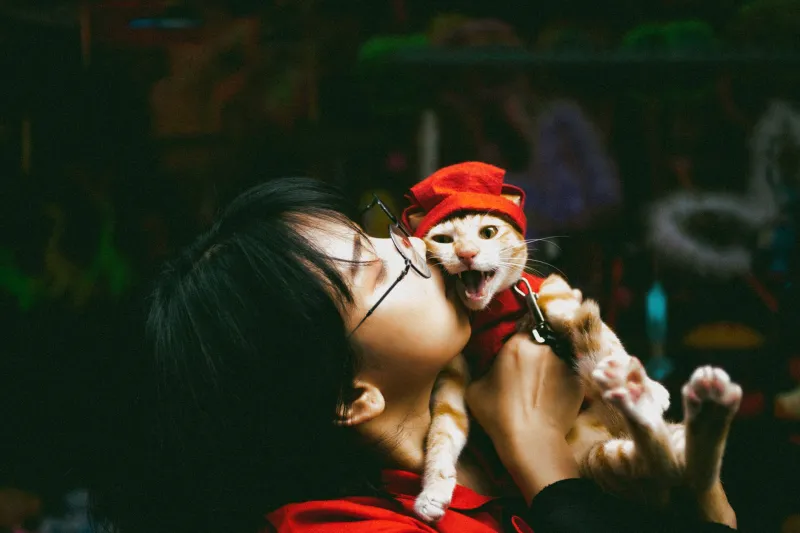
Step one: Find or manufacture a creator whose whole personality is 'chaotic cat household.' Hair slightly undone. Apartment visibly lived-in. Cat has knocked something over in every single frame. The vibe is 'I haven't vacuumed in three days and I'm thriving.'
Step two: Have that creator talk about the brand in the most offhand, almost dismissive way possible. 'I mean, I just grab this because it's fine, my cats eat it, I don't have time to research seventeen different protein sources.' Relatable! Authentic! Not at all scripted!
Step three: Make sure the product itself is priced at a level that would make the actual messy, budget-strapped cat parent it's supposedly targeting flinch at the checkout screen.
The genius — and it genuinely is a kind of genius, even if it's evil genius — is that the aesthetic of not caring about aesthetics has become its own premium signal. You're not buying expensive cat food. You're buying the identity of someone who is above buying expensive cat food. The brand is the irony. The irony is the brand.
The Receipts Are Everywhere If You Look
Let's talk numbers for a second, because the numbers are where this whole thing gets genuinely unhinged.
Several mid-tier pet brands that have built their entire public identity around 'no-nonsense, real cat owner' content are spending, by industry estimates, anywhere from 30 to 50 percent of their marketing budgets on creator partnerships. That's not a scrappy startup posting genuine content from their garage. That's a coordinated campaign designed to look like it isn't a coordinated campaign.
Meanwhile, the products themselves? A lot of them are manufactured by the same contract facilities producing the luxury brands they're implicitly mocking. Same facility. Different bag. Different vibe. Wildly different story.
The 'messy cat mom' creator you love, the one who seems so genuinely chaotic and real? In many cases, she has a media kit, a rate card, and a dedicated brand partnerships manager. The cat knocking the bowl over might be real. The bowl being strategically placed near the edge for better camera angles? Also real.
Why It Works So Well on Cat People Specifically
Here's the part that's actually fascinating from a cultural standpoint: cat people are uniquely susceptible to this particular play, and it's not because they're gullible. It's because the cat internet has always positioned itself as the anti-mainstream corner of the web.
Cats, as an internet symbol, have long represented a kind of cheerful indifference to aspiration. They don't perform for you. They don't care about your aesthetics. They will sit on your laptop during a work call and stare directly into the camera with zero remorse. The entire emotional appeal of cat content is its resistance to being polished.
So when a brand wraps itself in that energy — when it says, in essence, 'we're the cat of pet brands, we don't care about being fancy' — it's borrowing the most powerful cultural currency cat content has. It's wearing the cat's face while selling you something the cat would absolutely knock off the counter if it could read the ingredient label.
The Influencer Culture They Fund Is the One They Mock
The truly spectacular part of this whole ecosystem is the ouroboros quality of it. These brands mock influencer culture in their content while simultaneously being the primary financial engine keeping that influencer culture alive.
The chaotic cat mom creator they're funding? She's an influencer. The 'candid' content they're producing? It's influencer content. The carefully maintained aesthetic of not having an aesthetic? It's an aesthetic, produced by a team, with a budget line item.
What they've done is find a way to participate in the attention economy while pointing at the attention economy and going 'ugh, gross, right?' And enough people find that wink so charming that they hand over their credit card information.
It is, to use a term the internet would appreciate, extremely galaxy-brained.
So What Do You Actually Do With This Information
Look, we're not here to tell you what to buy for your cat. Your cat, frankly, does not care. Your cat is going to eat whatever you put in the bowl, ignore the expensive toy, and then aggressively headbutt the cardboard box it came in at 3 a.m.
But maybe the next time a brand's content makes you feel seen — makes you feel like they get the chaos of real cat ownership in a way those fancy brands don't — it's worth pausing for exactly one second. Check the price tag. Check the ingredient list. Check whether the creator talking about it has a link in their bio that says 'collab inquiries.'
Authenticity is not a flavor. It's not a brand value. It's not something that can be line-itemed into a Q3 marketing strategy.
Your cat is authentic. Your cat has never once pretended not to want something while secretly wanting it very badly.
Your cat's kibble brand, on the other hand? That's a different story entirely.