Locking the Cat Door: Why Viral Feline Accounts Are Ditching Millions of Followers for Members-Only Clubs
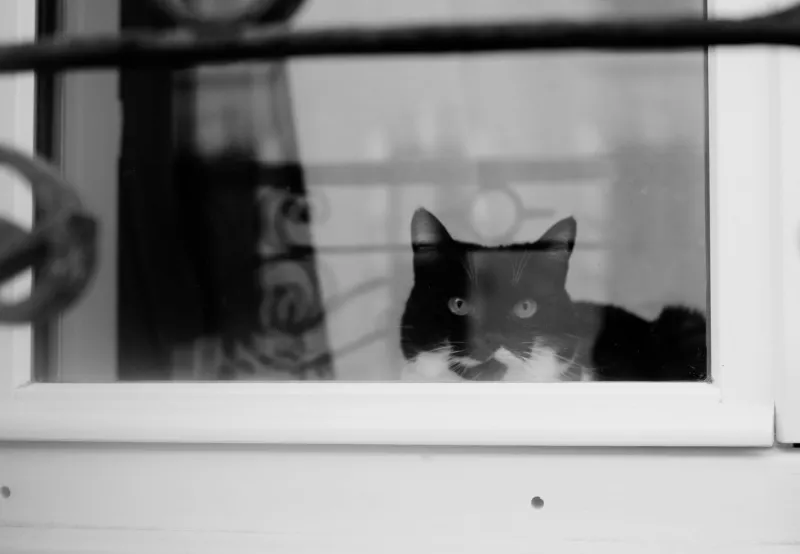
You opened Instagram on a Tuesday morning, coffee in hand, ready to receive your daily dose of a cross-eyed Himalayan doing absolutely nothing of consequence. And then you saw it: This account is private. Three million followers. Gone. Or rather, still there—just suddenly unreachable, like a cat who has decided your lap is no longer an approved sitting zone.
This is happening more than you think. Across TikTok, Instagram, and X (the app formerly known as a place people actually enjoyed), some of the most established cat accounts in the game are quietly pulling up the drawbridge. They're not deleting. They're not dying. They're just... leaving. And they're taking their cats with them into invitation-only Discord servers, tiered Patreon communities, and Substack newsletters that charge eight dollars a month to watch Mr. Fluffington sneeze.
So what exactly is going on? Is this burnout? Is this a business pivot? Or is this the most sophisticated power move in feline content history?
The Algorithm Finally Broke Them
Let's start with the boring-but-real explanation, because it matters: the platforms are genuinely terrible right now for organic cat content.
Instagram's reach for non-Reels content has cratered. TikTok's For You Page has become so aggressively trend-dependent that a video of a cat simply existing—not doing a trending sound, not wearing a costume that references a meme from six days ago—essentially gets buried alive. X has become a monetization hellscape where engagement bait and political outrage outperform anything wholesome by a factor of about forty to one.
For accounts that built their entire identity on slow, genuine, personality-driven cat content, this is existential. You spent four years cultivating a following that genuinely cares about your elderly rescue named Biscuit, and now the algorithm wants you to make Biscuit do the Hawk Tuah sound or forget you exist. That's not a creative opportunity. That's a hostage situation.
Going private—or moving to a platform you actually control—is, in many cases, a direct response to algorithmic decay. It's not retreat. It's relocation.
The Burnout Is Real and It Has Claws
Here's the part nobody really wants to say out loud: managing a viral cat account is a job. A genuinely exhausting, boundary-obliterating, comment-moderating, brand-deal-negotiating, DM-answering job that pays inconsistently and comes with a side of strangers telling you your cat is ugly or, worse, that you don't deserve her.
The accounts that have been doing this for five or more years didn't sign up for content creation as a career. Most of them started because their cat was funny and they wanted to share it. Then the followers came. Then the brand deals. Then the pressure to post consistently, to stay relevant, to perform joy on days when joy was genuinely hard to locate.
Several former public cat account owners who spoke to communities on Reddit have described the transition to private or paid platforms in strikingly similar terms: relief. The word that keeps coming up is relief. Not pride, not profit—relief. The sensation of not being watched by three million strangers while you're just trying to take your cat to the vet.
Burnout in the creator economy isn't new, but cat account burnout hits differently because the audience often doesn't see a person—they see a cat. And a cat, in the parasocial imagination, doesn't get tired. A cat doesn't need boundaries. A cat is just supposed to be there, being a cat, forever, for free.
The Business Case Is Actually Pretty Smart
Okay, but let's not romanticize this entirely. Some of these accounts going private are making a calculated economic decision, and it's a sharp one.
A million Instagram followers sounds impressive until you realize that the actual monetization on that number—through brand deals, affiliate links, and ad revenue—is wildly inconsistent and entirely dependent on platform whims. One algorithm change and your CPM collapses. One brand deal gone wrong and your reputation takes a hit with followers who feel like they own you.
Contrast that with a Patreon community of five thousand paying subscribers at seven dollars a month. That's $35,000 a month in predictable, recurring revenue that doesn't care what Instagram decided to do with its feed this week. The audience is smaller but infinitely more invested. They're not scrolling past you. They signed up, entered a credit card number, and chose to be there. That's a different relationship entirely.
Discord communities built around cat accounts have become genuinely interesting micro-ecosystems—places where the followers actually talk to each other, where the cat's owner can interact without being mobbed, where the vibe is closer to a fan club than a comment section. It's parasocial, yes, but it's parasocial with a door policy.
What You Actually Lose When the Account Goes Dark
Here's the uncomfortable part of this conversation: when a major cat account goes private or moves behind a paywall, the loss is felt unevenly.
For people who can afford eight dollars a month and have the bandwidth to join another Discord server, the transition is mildly annoying but manageable. For the teenager who found a reason to smile during a genuinely bad year because some stranger's orange cat was inexplicably obsessed with a specific brand of paper bag? That content just became inaccessible. The thing that was free and communal and accidentally therapeutic is now a subscription product.
This isn't a condemnation. Creators deserve to be compensated, deserve boundaries, deserve to not perform endlessly for platforms that take a cut and offer nothing in return. But the shift does change something fundamental about what cat content has meant on the internet—this weird, chaotic, democratic space where a cat from rural Ohio could make a person in a city apartment feel less alone for thirty seconds.
The Future Is Probably Gated, and Cats Don't Care Either Way
If the trend holds—and there's no real reason to think it won't—the landscape of cat content is going to bifurcate pretty dramatically. You'll have the algorithmically-optimized, trend-chasing content on the big platforms, churned out by accounts willing to play the game. And then you'll have the more personal, more intimate stuff living behind membership walls, accessible to the people who care enough to pay.
The cats, for their part, remain magnificently indifferent to all of this. They are not tracking their follower counts. They do not have opinions about Discord server architecture. They are sitting in a patch of afternoon sunlight, completely unbothered, occasionally knocking something off a shelf for reasons that will never be fully explained.
Maybe that's the real lesson here. The internet built an entire parasocial economy around creatures who never agreed to be public figures. The accounts going private aren't betraying their audiences. They're finally doing what the cats suggested from the very beginning: opting out on their own terms, finding a quieter room, and closing the door.
You can knock. But they'll decide if they feel like answering.