Cats Are Getting More Comments Than Your Favorite Celebrity and the Numbers Are Genuinely Unhinged

Let's say you post a selfie. You get 400 likes and maybe — maybe — twelve comments, eight of which are fire emojis from your cousin. Now imagine a grainy, slightly out-of-focus video of a tabby aggressively batting a water glass off a kitchen counter. Same platform, same time of day. That cat is going to get 400 likes and 200 comments, half of which are people tagging their friends, narrating the cat's inner monologue, and arguing with strangers about whether this constitutes "chaotic evil" behavior.
This is not a coincidence. This is a pattern. And it is driving data analysts genuinely, professionally insane.
The Numbers Nobody Can Fully Explain
Across TikTok, Instagram Reels, and YouTube Shorts, cat content consistently outperforms virtually every other content category when you isolate the comment-to-like ratio — that is, the proportion of people who don't just passively double-tap but actually stop, open the keyboard, and say something. According to social media analytics firm Conviva's 2023 benchmarking data, pet content broadly generates comment engagement rates roughly 2.5x higher than lifestyle content and nearly 3x higher than fashion. Cat content specifically skews even further.
Marcus Delray, an independent social media data consultant who's worked with mid-tier creators across multiple verticals, puts it bluntly: "I've seen cat accounts with 200,000 followers outperform verified celebrity accounts with 4 million when it comes to comment volume per post. It's not even close. The ratio is just structurally different."
So what's actually going on?
Theory One: Cats Are Basically Rorschach Tests
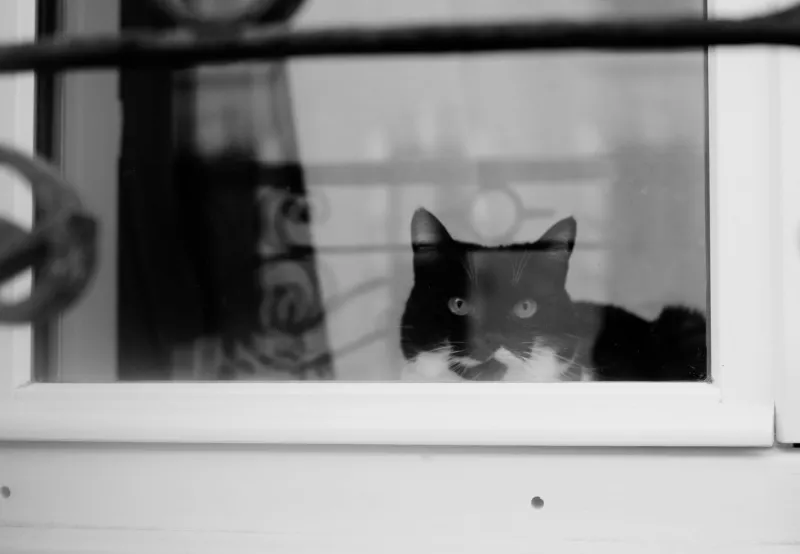
One of the more compelling explanations has nothing to do with algorithms and everything to do with how our brains process ambiguity. Cats, unlike dogs, are famously unreadable. A dog wags its tail and you know what's happening. A cat sits in a box and stares at the wall and suddenly everyone on the internet has a theory.
That interpretive gap — the space between what a cat is doing and what it might mean — is prime comment bait. People aren't just reacting to the content. They're actively constructing meaning in public. "He's plotting," someone writes. "She's seen things," replies another. "This is my emotional support criminal," adds a third. Before long, you've got a 400-comment thread that functions less like a comment section and more like a collaborative improv exercise.
Dr. Priya Nair, a behavioral researcher who studies online community formation (and who also, full disclosure, runs a private Instagram account dedicated to her two Ragdolls), describes this as "collective narrative building." "Cats are ambiguous enough that people feel invited to project," she explains. "And projection, in comment sections, is extremely social. You're not just talking to the cat. You're performing for the other commenters."
Theory Two: The Algorithm Smelled Blood and Started Feeding
Here's where it gets a little more conspiratorial, and frankly, a little more fun.
Multiple platform engineers — speaking anonymously, because of course they are — have noted that recommendation algorithms on TikTok and Instagram weight comment activity heavily when deciding what to push into wider distribution. Comments signal "this content made someone feel something strongly enough to respond," which is a higher-order engagement signal than a like. If cat content naturally generates more comments, it gets pushed further. If it gets pushed further, it reaches more people who comment. And the cycle compounds.
In other words: cats might have accidentally gamed the algorithm by just being cats. They didn't mean to exploit the engagement feedback loop. They don't mean anything. They're cats. But the result is a self-reinforcing system where cat content gets algorithmically amplified because it generates comments, which means more people see it, which means more comments, which means more reach.
TikTok creator Bri Holloway, who runs the account @perpetuallychaoticcats with 890,000 followers, noticed this shift around late 2022. "I started paying attention to which videos got pushed into the FYP versus which ones just kind of sat there," she says. "The ones that took off were almost never the ones I thought were the best videos. They were the ones where something slightly weird or confusing happened that made people need to comment and ask what was going on."
She now deliberately leaves certain things unexplained in her videos. "If I caption everything, people just watch and leave. If I leave a gap, they fill it in the comments. That's when the algorithm really starts moving."
Theory Three: We're All Just Desperately Lonely and Cats Know It
Okay, this one stings a little. But it might be the most honest explanation.
In an internet landscape increasingly dominated by polished personal brands, sponsored content, and the vague sense that everyone online is trying to sell you something, cat content is one of the last frontiers that feels genuinely, chaotically authentic. Nobody's cat is performing a brand deal. Nobody's cat is building a personal development funnel. The cat is just being a weird little creature, and somehow that's more emotionally resonant than 90% of what human creators produce.
Comment sections under cat videos frequently devolve — in the best possible way — into people sharing memories of their own pets, processing grief over animals they've lost, or just announcing their emotional state to strangers. "I needed this today" is practically a genre unto itself in cat comment sections. So is "I showed this to my cat and she was not impressed."
Delray, the data consultant, thinks this is the underrated driver. "Cat content functions as a social lubricant," he says. "It gives people a low-stakes shared experience to bond over. The comment section becomes a community, not just a reaction queue."
What This Means for the Rest of the Internet
If you are a human creator reading this and quietly feeling a little victimized by these statistics, that's valid. The metrics are not in your favor and they may never be. Cats have a structural advantage that no amount of production quality or posting consistency can fully overcome: they are genuinely unpredictable, emotionally legible enough to love but ambiguous enough to project onto, and they do not require payment or contracts.
For platforms, the implications are interesting and slightly alarming. If cat content is algorithmically supercharged because of its natural comment-generation properties, platforms may be inadvertently shaping their entire content ecosystems around feline behavior patterns. The feed, in some measurable sense, is being organized around what cats do.
Which, if you've been on the internet for more than fifteen minutes, tracks perfectly.
Cats were never just content. They were always infrastructure. The numbers just finally caught up to what every cat owner already knew: once a cat decides to occupy a space, it owns the space. The internet is no different.
The comment section was always theirs. We just didn't have the data to prove it yet.